
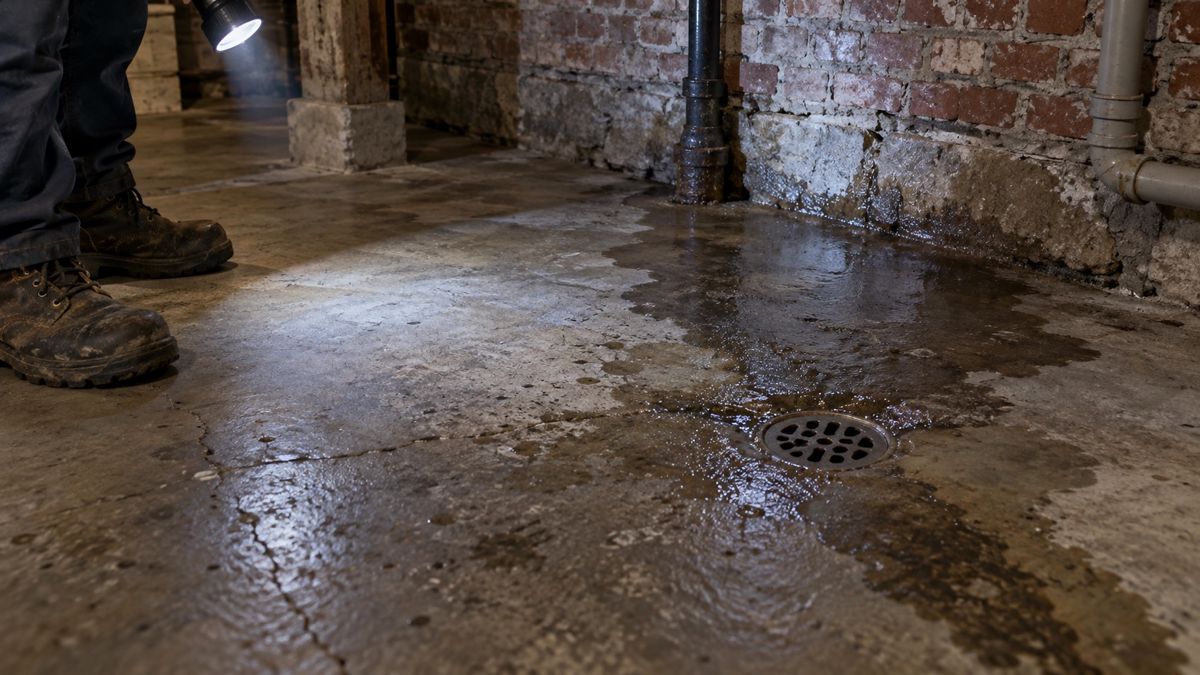
The most common signs of a hidden slab leak are a water bill that climbs for no reason, the sound of running water when everything is off, warm patches on the floor and damp spots on concrete. If you notice one or more of these, check your water meter and call a plumber before the damage spreads.
This guide explains what a slab leak is, how likely it is in a Montréal building, how to spot one and what usually happens next.
What is a slab leak, and how common is it in Montréal?
A slab leak is a leak in a water or drain pipe that runs under or inside a concrete floor. In warm regions, where many homes sit directly on a slab, the term is very common. In Montréal it comes up less often, because most houses, plexes and triplexes have a basement and the plumbing is usually visible in the ceiling joists.
It still matters here, and the situations are fairly specific:
- Basement floors where drain lines or supply pipes were cast into or buried beneath the concrete.
- Bungalows and additions built on a slab.
- Ground-floor condos where pipes run through the slab.
- Homes with hydronic in-floor heating, where hot water circulates through pipes inside the concrete.
If your building is none of these, a hidden leak is more likely to be inside a wall or ceiling. The warning signs below still apply.
Which signs point to a hidden leak?
No single sign proves a slab leak. Several together are a stronger reason to investigate.
Your water bill keeps rising
If your use has not changed but the bill has, water may be escaping somewhere. A small leak can run for months before anything is visible. Compare several recent bills, and think about whether anything changed, such as guests, a new appliance or a filling pool.
You can hear water running
Stand in a quiet room with every tap and appliance off. A faint hiss or trickle from the floor or wall can mean a pressurized pipe is leaking.
The floor feels warm or damp
A warm spot on a floor where there is no heating pipe, or a hot water line that takes a long time to deliver hot water, may point to a leaking hot line. On bare concrete in a basement, look for damp patches, a musty smell or a white powdery deposit called efflorescence.
Floors and finishes are changing
Lifting laminate or hardwood, cracked tiles, swollen baseboards and peeling paint near the floor can all mean moisture is coming from below. Mould that returns after cleaning is another hint.
Water pressure drops
Low pressure at some fixtures, with no obvious cause, can come from a leak in the supply line serving them.
How do you confirm it with your water meter?
This is a simple test you can do yourself in about an hour.
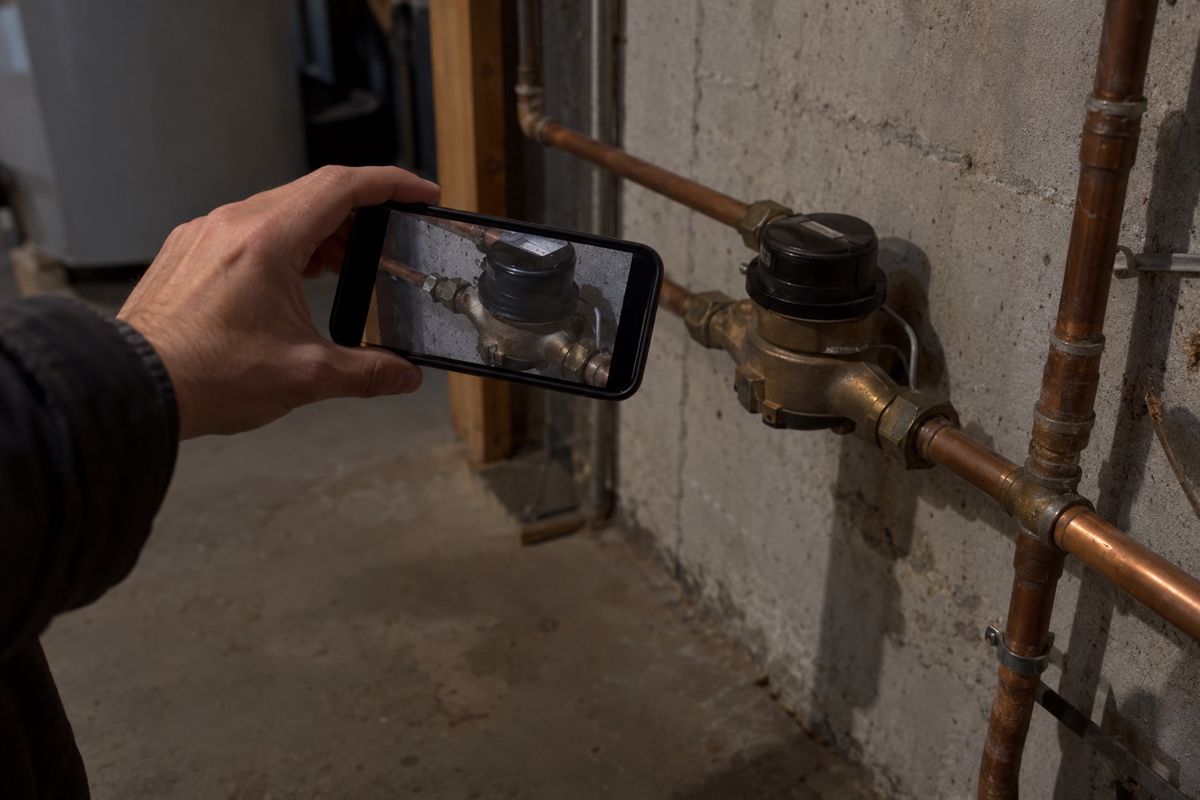
- Turn off every tap and appliance that uses water, including the washing machine, dishwasher and ice maker.
- Find your water meter and write down the reading, or take a photo of it.
- Wait about an hour without using any water.
- Check the meter again. If the number or the small leak indicator has moved, water is escaping somewhere.
In some plexes and condos, the meter is shared or sits somewhere you cannot reach. In that case, ask the owner or syndicate for help. A plumber can also pressure-test the lines to confirm that a leak exists.
How do plumbers find the exact spot?
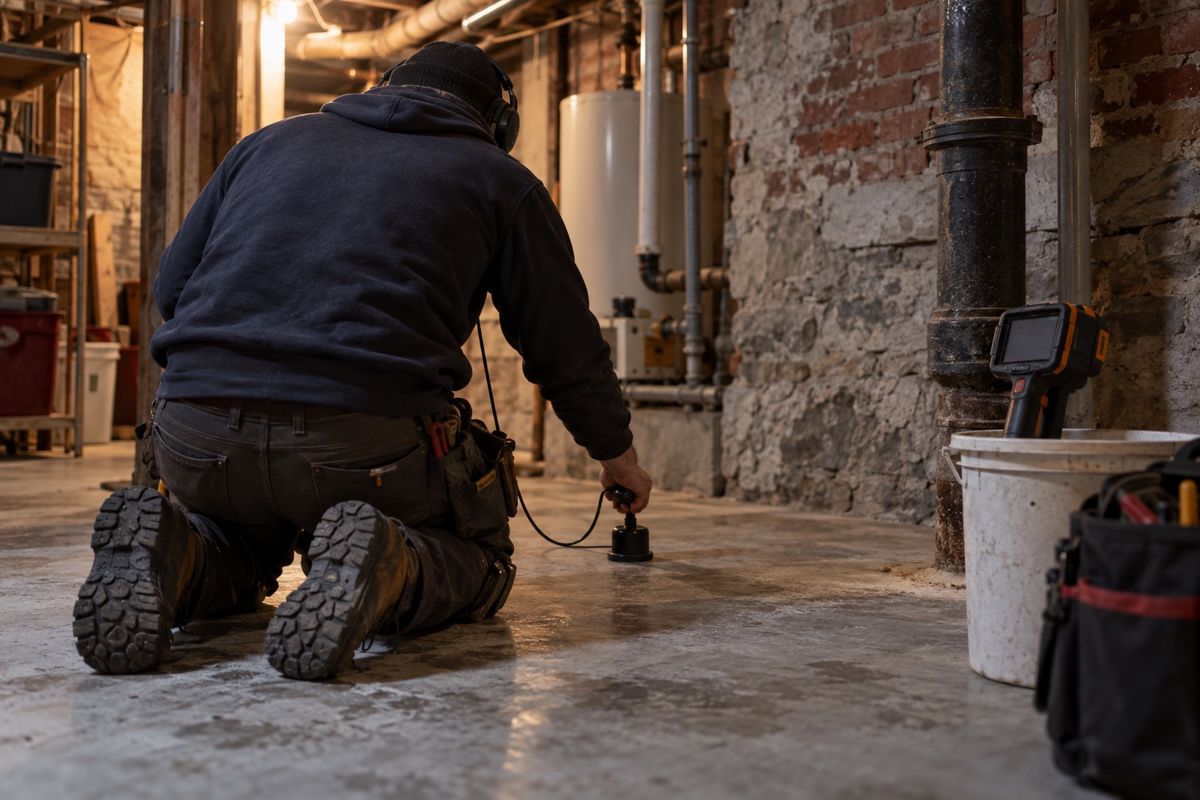
Breaking up a floor to look for a leak is the last thing anyone wants. Plumbers use several non-invasive methods first.
- Pressure testing isolates which line is losing pressure, such as the hot line, the cold line or a section of heating pipe.
- Acoustic listening uses sensitive microphones on the floor surface to locate the sound of escaping water.
- Thermal imaging reveals warm or cool patterns in the floor that suggest a leaking pipe.
- Camera inspection is used for drain lines, where a leak may be a crack or offset joint beneath the slab.
Used together, these can narrow a leak to a small area, so the floor is opened in one place instead of many.
What are the repair options?
The repair depends on the pipe, the location and how many leaks have already occurred.
- Spot repair. The slab is opened over the leak, the damaged section is replaced and the floor is patched. This suits a single leak in a good-condition line.
- Rerouting. The leaking line is abandoned and new pipe is run through walls or ceilings. It avoids repeated work in the slab but opens other finishes.
- Repiping. If the pipes are old, such as galvanized steel or aged copper with several leaks, replacing the supply system may be wiser than patching it one leak at a time.
Drain-side leaks under a basement floor are a separate matter. They often involve cast iron or clay and may need a camera inspection and a section replaced.
What does it cost, and what drives the price?
Costs vary a great deal, and the figures below are only rough guides from the general market in Canada. They are not quotes from any business. Leak detection by itself often falls somewhere between a few hundred and a bit over a thousand Canadian dollars, depending on the method and the size of the building. Repairs that involve breaking concrete or opening walls can reach several thousand Canadian dollars, and a whole-building repipe in a plex can cost considerably more.
The main drivers are:
- How easy it is to reach the pipe, and what finishes sit above it.
- The number of leaks and the material of the pipes.
- The size of the building and how many units are affected.
- Permits, inspections and restoration of floors and walls.
Ask for a written scope and price, and ask what happens if more damage turns up. Check your insurance policy early, since sudden water damage may be covered while ongoing leaks and wear often are not.
What should you do right now if you suspect a leak?
Do the meter test and note the result. If you can see water spreading, close the main valve, which is usually in the basement near where the water line enters the building. Move belongings away from the wet area and take photos.
Avoid cutting into the floor yourself. If the area is near electrical outlets, keep clear and call a professional. In Quebec, plumbing work is generally done by contractors holding an RBQ licence, and many belong to the Corporation des maîtres mécaniciens en tuyauterie du Québec. Ask to see the licence and proof of insurance before work starts.
Where can you get help in Montréal?
If the meter test shows a leak, or you notice several of the signs above, the next step is to have it located and priced in writing. You can read about our slab leak detection and repiping service, or see emergency plumbing if water is already spreading. Montréal Plumbing can arrange service in English and French.