Skip to content
  • Open 24/7
  • Upfront pricing
Montréal, QC (514) 555-0123

Sewer lines in Montréal

Sewer line repair Montréal owners can plan with confidence

Repeated backups, cracked clay pipe or roots in the line. Call (514) 555-0123 and describe what you are seeing.

(514) 555-0123 Call now
  • Camera inspection first
  • Trenchless and open-cut options
  • Written scope before work starts
Request a plumber
How soon do you need help?

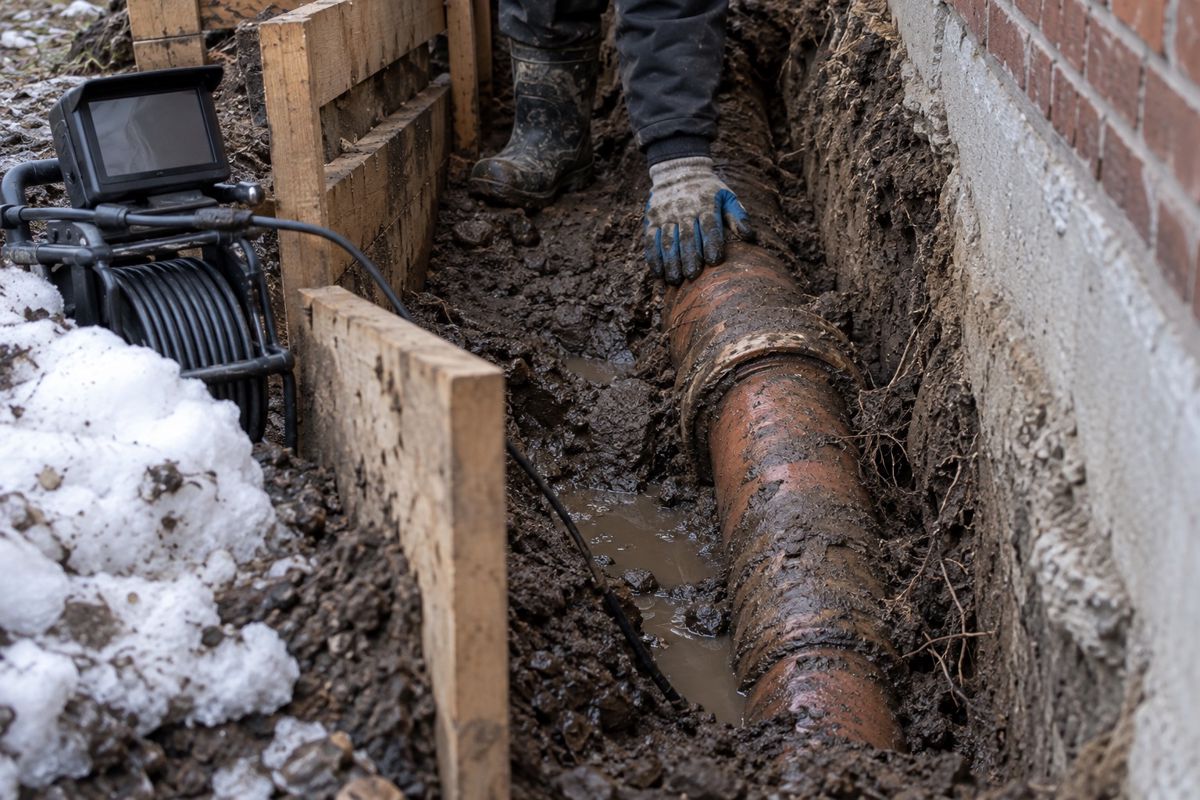
Excavated old clay sewer pipe beside a brick duplex

How do you know you need sewer line repair?

Typical signs are repeated backups, gurgling toilets, slow drains in several fixtures at once, damp patches or sunken ground along the line, and a sewer smell in the basement or yard. If a drain cable clears the problem but it keeps coming back, the pipe itself may be damaged.

The way to know for sure is a camera inspection. A small camera is fed through the line, showing cracks, root intrusion, joints that have shifted and sags where water pools. A reliable sewer line repair Montréal homeowners can trust starts with that footage, not with a guess.

The sewer line is the pipe that carries waste from the building to the municipal main. The part on your property is generally the owner's responsibility, while the section under the street belongs to the city. Check with your borough about where that boundary falls for your address.

What problems affect older Montréal sewer lines?

Many buildings in older neighbourhoods have sewer lines made of clay tile or cast iron. Some post-war homes may have other materials, such as fibre pipe, which can deform over time. Common problems include:

  • Roots working into the joints between clay sections.
  • Cracked or collapsed pipe from age and ground movement.
  • Frost heave and freeze-thaw cycles that shift the soil.
  • Offset joints and sagging sections that trap waste.
  • Grease and scale narrowing the pipe.

Older areas are often served by combined sewers, which carry both wastewater and stormwater. In heavy rain or spring thaw, those systems can fill up and push water back toward basements. A backwater valve (clapet antiretour) is a device that helps stop that. Rules and subsidies differ by borough, so ask yours what applies to your building.

What are the repair options?

The right method depends on what the camera shows.

  • Spot repair. One damaged section is dug up and replaced. It suits a single break at a known location.
  • Trenchless lining. A resin-coated liner is pulled into the old pipe and cured to form a new pipe inside it. It limits digging, but the host pipe must be in suitable shape.
  • Pipe bursting. A new pipe is pulled through as the old one is broken apart. It can work when the old pipe is too damaged for lining.
  • Open-trench replacement. The line is dug up and replaced in full. It gives the most control and is often needed for collapsed or badly sagging pipe.

Trenchless is not always possible, and it is not always cheaper. A good plumber explains why a method fits your pipe. For routine blockages, see drain cleaning first.

Sewer work varies widely. The depth and length of the line matter, since deeper pipes need more excavation and shoring. Location matters, because a line under a slab, a driveway, a sidewalk or a garden is harder to reach than one in open ground. Winter work can be harder because of frozen soil, and work in the public right of way may need a permit from the borough.

Other factors include the pipe material, whether trenchless methods suit the pipe and whether a backwater valve is added at the same time. A lining job can often be finished in a day or two after preparation, while an open-trench replacement may take several days with restoration.

Ask for a written scope that covers digging, restoration of surfaces, permits and what happens if the camera finds a worse problem. You can also read about emergency plumbing if the line has already failed.

What should you check before hiring, and when should you call?

Call when backups repeat, when the camera shows damage or when you see water pooling in the yard. Do not keep running water if the line is blocked, since it will head for the lowest drain in the building.

Before you hire, ask to see the contractor's RBQ licence and proof of insurance, and ask for the camera footage. In Quebec, plumbing work is generally done by contractors with an RBQ licence, and many belong to the Corporation des maîtres mécaniciens en tuyauterie du Québec. Check with your insurer about sewer backup cover, since some policies need an endorsement. Return to the home page for an overview, or call (514) 555-0123 to talk through your options.

Open 24/7
Upfront pricing
Clear communication
Local plumbers

How it works

1

Call or tap for help

Tell us what is wrong. We answer around the clock.

2

Plumber dispatched

The nearest plumber heads your way with a stocked van.

3

Fixed with a written price

You approve the price before any work starts.

Request sewer line repair

Tell us what you need and we call you back.

How soon do you need help?

No obligation.

Questions about emergency plumber in Montréal

Who is responsible for the sewer line on my property?

In general, the owner is responsible for the private section of the line from the building to the property boundary, and the city handles the public main. The exact boundary can differ by address. Contact your borough before any excavation, since work near the street may need a permit.

What is a backwater valve and do I need one?

A backwater valve, called a clapet antiretour in French, closes automatically if sewage flows backward toward the building. Many municipalities have rules or subsidy programs about them. Whether you need one depends on your building and borough, so ask your borough and a plumber.

Is trenchless sewer repair always better than digging?

No. Trenchless methods cause less disruption to your yard and landscaping, but they only work when the old pipe is in suitable shape. A collapsed or badly sagging pipe usually needs digging. The right method depends on the camera findings, access and budget.

Can tree roots damage a sewer line?

Yes. Roots seek out moisture and can enter older pipes at joints, then thicken and block the line. Cleaning removes the roots but does not fix the opening they came through. Without a repair or a liner that seals the joint, roots usually grow back, often within a season or two, so repeat clogs are a good reason for a camera check.

Will my insurance cover sewer line repair?

It depends on the policy. Some cover sudden damage and sewer backup only with a specific endorsement, and many exclude wear and tear on the pipe itself. Read your policy and ask your insurer or broker before work starts, and keep the plumber's report and camera footage.

Ready when you are

Call now or request a quote online.

(514) 555-0123