
Skip to content
  • Open 24/7
  • Upfront pricing
Montréal, QC (514) 555-0123

Hidden leaks and repiping

Slab leak detection Montréal owners can act on early

Unexplained water bills, warm floor spots or the sound of running water. Call (514) 555-0123 and describe what you notice.

(514) 555-0123 Call now
  • Non-invasive leak finding
  • Spot repair or rerouting
  • Whole-house repiping explained
Request a plumber
How soon do you need help?

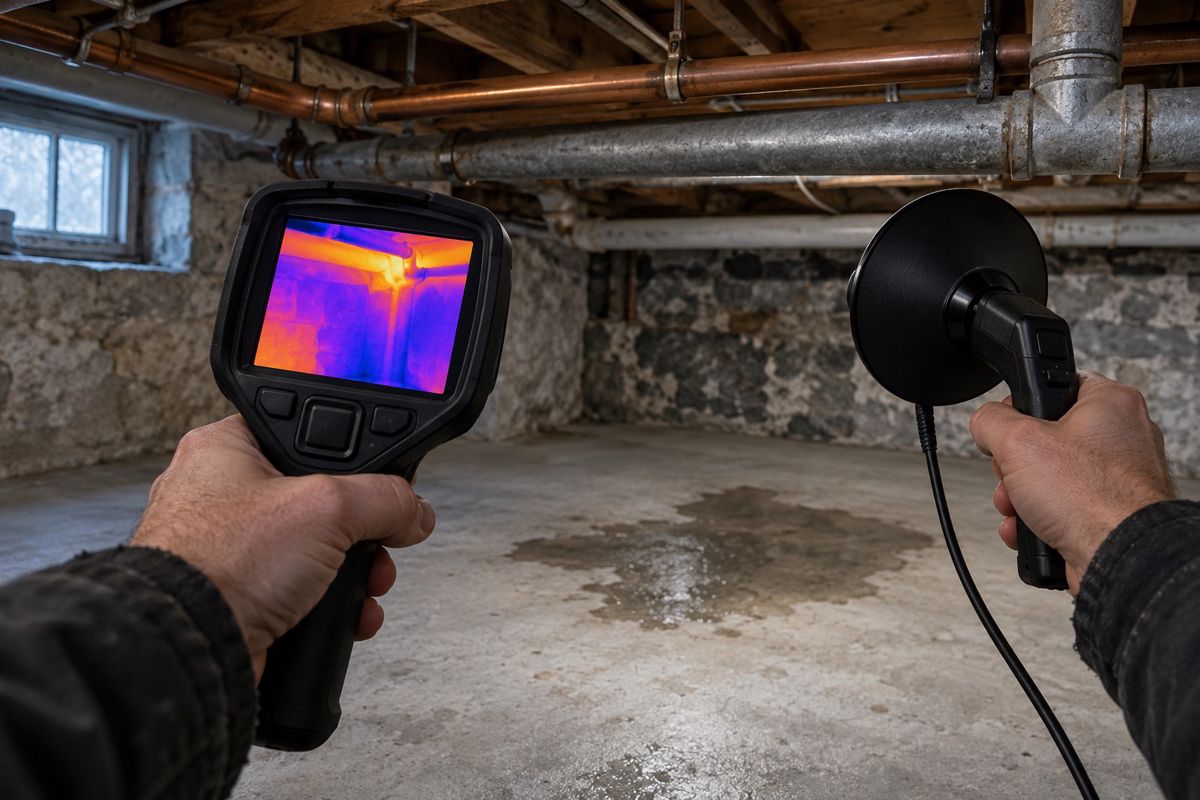
Plumber scanning a concrete basement floor for a hidden leak

What is a slab leak and does it happen in Montréal?

A slab leak is a leak in a pipe that runs under or inside a concrete floor slab. It is more often discussed in warm regions with slab-on-grade homes, and it is less common here because many Montréal buildings have basements. It still happens, and the places to think about are specific:

  • Basement floors, where drain and supply lines may run under or inside the concrete.
  • Ground-floor condos and bungalows built on a slab.
  • Homes with in-floor hydronic heating, where hot water pipes are cast into the slab.
  • Garage and addition slabs with a water line running through them.

If you are searching for slab leak detection Montréal buildings can use, the goal is the same everywhere: find the exact spot without breaking up the whole floor.

What are the signs of a hidden leak under a floor?

These clues are worth taking seriously:

  • A water bill that rises with no change in how you use water.
  • The sound of running water when every fixture is off.
  • A warm patch on a floor, or a hot-water line that seems to lose heat quickly.
  • Damp spots, mould smell or efflorescence (white powder) on a concrete basement floor.
  • Cracked tiles, lifting flooring or baseboards that swell.
  • Low water pressure at some fixtures.

A simple first test is to turn off everything that uses water and watch the meter. If it keeps moving, water is escaping somewhere. A plumber can then narrow down the line and the area. If the leak is already flooding a space, see emergency plumbing for what to do first.

How is a slab leak found and repaired?

Detection usually combines several methods. A plumber may pressure-test the lines to confirm which one is leaking, listen with acoustic equipment to locate the sound of escaping water, and use a thermal camera to see temperature differences. Once the area is narrowed down, the floor is opened only where needed.

Repair choices depend on the pipe and the building:

  • Spot repair. Break the slab at the leak, replace the damaged section and patch the floor.
  • Rerouting. Abandon the leaking line and run new pipe through walls or ceilings, avoiding the slab.
  • Repiping. Replace the supply pipes throughout the building, which makes sense when leaks keep appearing.

The right option depends on the pipe age, how many leaks there have been and how hard the floor is to reach.

Older Montréal buildings may have galvanized steel supply pipes that rust from the inside, copper that develops pinhole leaks or older plastic systems that have reached the end of their life. Signs include brown water, falling pressure, repeated leaks and visible green or white corrosion at joints. Some older buildings may also still have a lead service line from the street, and the city runs information and programs on this, so ask your borough.

Repiping a plex needs planning. Several units may be affected, walls and ceilings often need to be opened and water is off for part of each day. PEX and copper are both common choices today, and the plumber should explain why one fits your building better.

For problems below the floor on the drain side, see sewer line repair. You can also start from the home page.

What changes the cost, and how long does it take?

Leak detection and repiping are priced very differently, but both depend on access. A slab leak under a finished floor costs more to reach than one in an open basement. Other factors are the number of leaks, the pipe material, the size of the building, how much wall and ceiling has to be opened and whether permits or inspections are needed.

Finding a leak often takes a few hours. A spot repair through concrete may take a day or two, including patching. A whole-house repipe can take several days, depending on the building and how many units are involved. Repairs to drywall and paint are usually a separate trade.

Ask for a written scope that explains the method, the pipe material, the surfaces to be restored and what happens if more leaks appear. Quebec plumbing contractors generally need an RBQ licence, so ask to see it. Call (514) 555-0123 to describe your situation.

What you can expect

1

Open 24/7

2

Upfront pricing

3

Clear communication

4

Local plumbers

How it works

  1. Call or tap for help

    Tell us what is wrong. We answer around the clock.

  2. Plumber dispatched

    The nearest plumber heads your way with a stocked van.

  3. Fixed with a written price

    You approve the price before any work starts.

Request slab leaks and repiping

Tell us what you need and we call you back.

How soon do you need help?

No obligation.

Questions about emergency plumber in Montréal

How do I check my water meter for a hidden leak?

Turn off every tap and appliance, including the ice maker and washing machine. Read the meter, wait about an hour without using any water, and read it again. If the reading has changed, water is escaping somewhere. Tell the plumber what you found, because it helps narrow the search.

Can a slab leak be repaired without breaking the floor?

Sometimes. Rerouting the supply line through walls or ceilings avoids opening the slab at all, although it opens other surfaces. Where the leaking pipe is inside the slab and must be accessed directly, some floor removal is needed. The plumber should explain which approach suits your building.

Is a slab leak an emergency?

It can be. If water is spreading across the floor or damaging walls, shut off the main valve and call. A slow hidden leak is less urgent, but it wastes water, can cause mould and can weaken finishes. Do not leave it for months, since the damage grows.

Is galvanized pipe a reason to repipe?

Often, yes. Galvanized steel corrodes inside, which restricts flow and eventually leaks. If you see brown water, falling pressure or repeated repairs, repiping may be the long-term answer. A plumber can inspect the pipes and cut a sample to show you their condition.

How much disruption does repiping cause?

More than most repairs. Walls and ceilings often need access holes, and water is shut off for part of each working day. A plan is made in advance so you know what to expect. In a plex, tenants or neighbours need notice as well.

Ready when you are

Call now or request a quote online.

(514) 555-0123